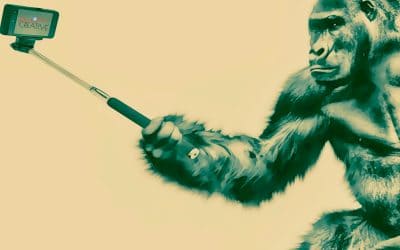
The Ghost in the Machine: Why Using AI Doesn’t Make You a Fraud
The boat is leaving the dock. The engine is AI. The captain is you.
The Ghost in the Machine
There is a quiet anxiety humming through the creative industry right now. It’s the fear that whispers: “If I use AI to write my drafts, edit my photos, or brainstorm my ideas, am I cheating? Am I a fraud? Is the work still mine?”
It’s a heavy burden. You feel like you’re standing on shaky ground, terrified that if anyone finds out you’re using a tool, they’ll revoke your “Creative” license.
Let’s be clear immediately: Using AI does not make you a fraud. Refusing to use it might make you irrelevant.
The truth is, the most successful creatives of the future won’t be the ones who reject technology. They will be the ones who master the art of human direction. You are not the machine; you are the conductor. And the orchestra is getting bigger, faster, and more complex.
The Myth of the “Pure” Creator
First, let’s dismantle the idea of the “pure” creator who works in a vacuum. The romantic notion of the artist sitting alone in a garret, pouring their soul onto a canvas without any tools, is a myth. Creativity has always been about leveraging tools to extend human capability.
The Photographer: When digital cameras replaced film, purists cried, “It’s not real photography!” Today, we can’t imagine a world without Photoshop. Did using layers make photographers frauds? No. It made them more capable.
The Writer: When word processors replaced typewriters, people feared the “undo” button would kill discipline. When spellcheck arrived, they said it would ruin grammar. Now, we can’t write without them.
The Musician: When synthesizers arrived, rock purists screamed, “Real music requires real instruments!” Today, those machines are the backbone of the global music industry.
The tool doesn’t define the artist. The vision does. If you use a camera, a word processor, or AI, you are simply using the most powerful tool ever invented to amplify your vision.
The “Miss the Boat” Reality: A History of Fear
History is littered with the wreckage of creatives who refused to adapt because they feared the new technology would “ruin” their craft.
1. The Photography Panic (1839)
Painters claimed photography was “soulless.” The Result? Painting didn’t die; it evolved into Impressionism and Abstract Art. Those who refused the camera lost relevance as documentarians; those who embraced it became the greatest artists of the century.
2. The Synthesizer Rebellion (1970s)
Traditional musicians called synthesizers “cheating.” The Result? The industry exploded. Innovators like Kraftwerk and Dr. Dre created sounds impossible with acoustic instruments. The purists were left playing covers in dive bars.
3. The CGI Revolution (1990s)
Filmmakers feared CGI would kill “real” animation. The Result? The industry doubled in size. Directors like James Cameron created worlds previously impossible. Those who refused to learn the software found themselves unemployable.
The Pattern is Clear: Every time a new technology arrives, there is fear. “It’s too easy.” “It lacks soul.” Then, it becomes the new baseline. The people who adapted didn’t lose their soul; they gained a superpower.
AI is not the end of creativity. It is the next evolution of the toolset. If you refuse to use it, you aren’t being “pure.” You are choosing to compete with a paintbrush while everyone else is using a jetpack.
Why AI is Critical for Survival Today
We are living in an era of content abundance. The internet is flooded with millions of articles, videos, and images every day. The barrier to entry for producing content has dropped to zero.
- The Volume Problem: To be seen, you need to produce more, faster, and more consistently.
- The Attention Problem: Audiences have shorter attention spans. You need to grab them instantly.
- The Complexity Problem: Clients expect high-quality video, audio, design, and copy all in one package.
AI is the only way to survive this complexity.
- It handles the drudgery: Transcribing, resizing, drafting, organizing. This frees your brain for Strategy, Emotion, and Connection.
- It accelerates iteration: Generate 10 variations of a logo in minutes. In the past, that took days.
- It levels the playing field: You don’t need a $50,000 studio. You can use AI to enhance audio, stabilize footage, and generate backgrounds.
If you don’t use AI, you aren’t “protecting your art.” You are limiting your reach. You are choosing to work slower, produce less, and compete on a field where your competitors are moving at 10x your speed.

How to Use AI Without Losing Your Soul
The fear of being a “fraud” comes from a misunderstanding. AI is a generator, not a creator. It produces raw material. You are the creator.
1. You Are the Editor, Not the Printer
The Fraud Mindset: “I asked AI to write my blog post, and I posted it.”
The Authentic Mindset: “I asked AI to generate 5 angles. I chose the one that resonated, rewrote the intro to match my voice, added my story, and fact-checked every claim.”
The Result: The structure came from AI. The soul came from you.
2. Inject Your “Human Data”
AI is trained on the average of the internet. It is good at being “generic.” It is bad at being you.
The Strategy: Feed AI your specific memories, unique opinions, and distinct voice. “Write a post about workflow, but use my specific analogy about the ‘campfire’.”
The Result: The AI provides the grammar; you provide the truth.
3. Own the Intent
AI doesn’t know why you are creating. You do. Define the intent: Who are you helping? What problem are you solving? If the AI output doesn’t align, throw it away. You are the gatekeeper.
4. The “Hybrid” Workflow
Use AI for: Research, outlining, brainstorming, formatting, fixing typos.
Use Yourself for: The hook, the story, the emotional climax, the final polish, the strategic decision.
The Feeling: When you finish, you look at the work and say, “I built this.” Because you did. You directed the traffic.
Continue Your Journey
The Bottom Line: You Are the Pilot
Imagine a pilot flying a plane with autopilot. The autopilot handles navigation and altitude. Is the pilot a fraud? No. Did the autopilot decide where to fly? No. The pilot did.
AI is your autopilot. It handles the turbulence of the mundane. But you are the one holding the controls. You decide the destination.
If you use AI to do the work for you, you are a passenger. If you use AI to help you do the work better, you are the pilot.
The world doesn’t need more generic content. It is starving for human perspective, empathy, and truth. AI can give you the words, but only you can give them meaning.
Don’t fear the tool. Master it. Don’t worry about being a fraud. Worry about being invisible.
The boat is leaving the dock. The engine is AI. The captain is you. Get on board.
The Multiskilled Advantage: Why Video, Audio, and Design Are No Longer Optional
Don't just make things. Make things that move, sound, and look right.For decades, the creative industry was built on silos. You were a writer, a designer, or a videographer. That era is over. Today, the most valuable creatives are the ones who can weave video, audio,...

Semantic Search: The End of Keyword Stuffing
Stop writing for robots. Start writing for humans who ask questions.Semantic Search: The End of "Keyword Bingo" If you have been anywhere near the SEO conversation in the last two years, you have heard the term "Semantic Search." It sounds academic. It sounds...

The Audience Myth: Why ‘Followers’ Won’t Save You (But Community Will)
Numbers don't matter. People do.The Audience Myth There is a dangerous illusion in the creative world. It goes like this: If I can just get enough followers, I'll be successful. So creatives chase the numbers. They optimize for likes, hack the algorithm, and pour...
SEO for Creatives: Why You Don’t Need to Be an Expert (But You Do Need a Strategy)
You provide the content; the strategy provides the path.SEO for Creatives If you are a designer, writer, videographer, or strategist, the term SEO (Search Engine Optimization) often triggers a specific reaction: eye-rolling. It sounds like a maze of technical jargon,...

The 5 Pillars of a High-Performance Workflow
A workflow isn't just a list of steps; it's a narrative arc.A workflow isn't just a list of steps; it's a narrative arc. Each phase has a specific job to do. Skipping a phase or rushing through it creates gaps that lead to errors, scope creep, and missed deadlines.1....

Beyond the Creative Spark: Why Workflow Matters
Stop hoping for a good project. Start designing one.Beyond the Creative Spark We often talk about the "spark"—the big idea, the perfect shot, the viral concept. In the creative world, we celebrate the magic of the final product. But if you ask any seasoned Project...

Mentoring Philosophy: The Daniel~Ibrahim Difference
Radical Honesty, Observation, and Presence: The Anti-Guru Mentoring MethodWhat "Mentoring" Actually Means Most people think a mentor is someone who has "made it," stands on a mountain top, and points down at you, shouting instructions on how to climb. They think it's...

Why Journal: Create Space for Creativity
The Unspoken Internal Dialogue Most people think journaling is about keeping a diary. They imagine a leather-bound book filled with neat handwriting, documenting the weather and what you had for lunch. They think it's about recording your life. They are wrong. For a...