
Traditional Sampan Fishing Boats: Witnessing Ancient Wooden Boat Building in Bangladesh
Discovering the Sampan: Bangladesh’s Traditional Wooden Fishing Vessel
In the coastal regions of Bangladesh and Southeast Asia, where the Bay of Bengal shapes daily life, a remarkable wooden vessel continues its centuries-old tradition—the sampan fishing boat. With its distinctive design and deep cultural significance, this traditional handcrafted boat serves as a lifeline for fishing communities along the Chittagong coast.
Join me on a journey exploring sampan boat construction, traditional maritime craftsmanship, and the resilient spirit of Bangladesh’s fishermen who navigate these vessels.
The Unique Design and Anatomy of a Chittagonian Sampan
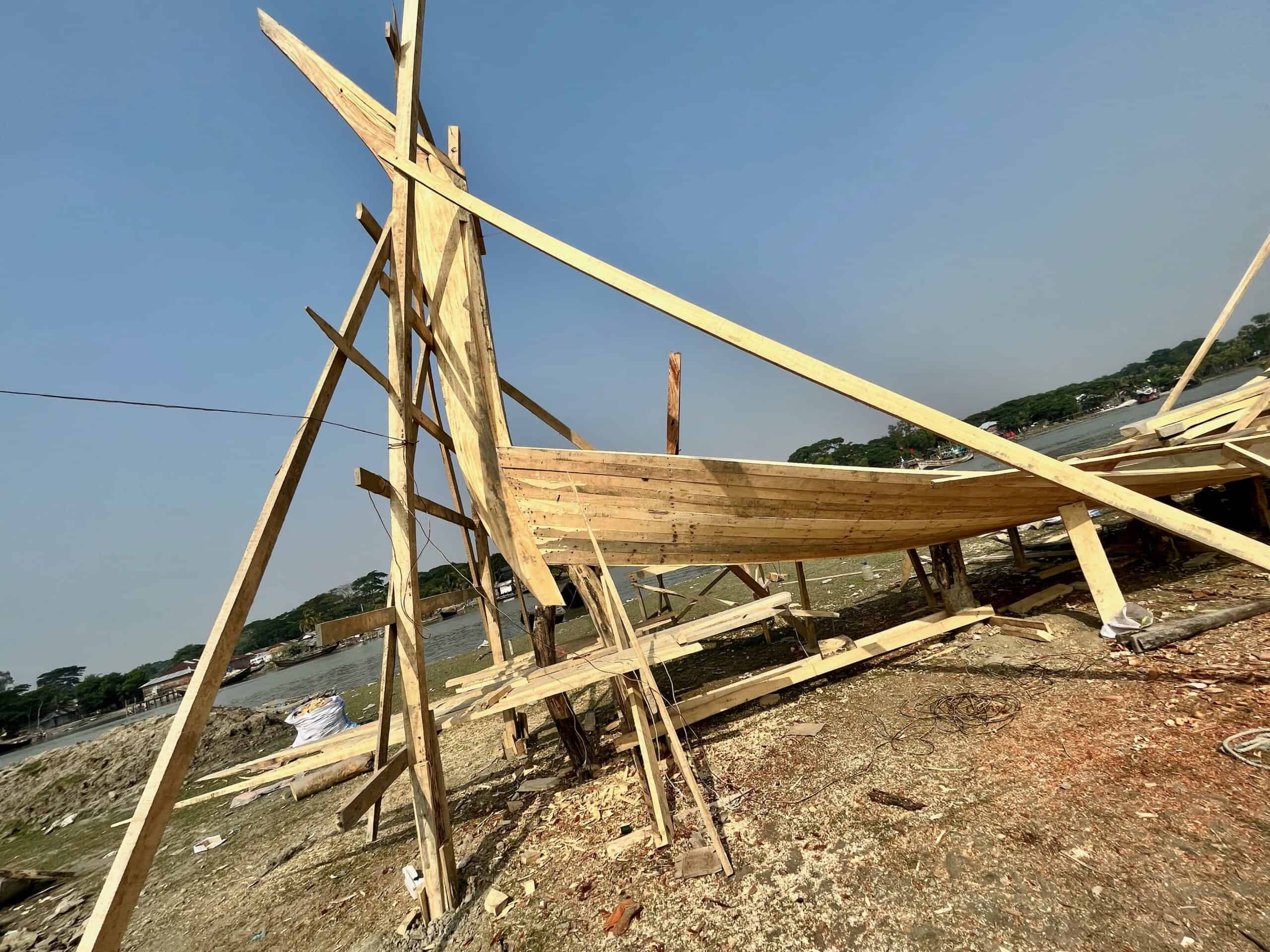
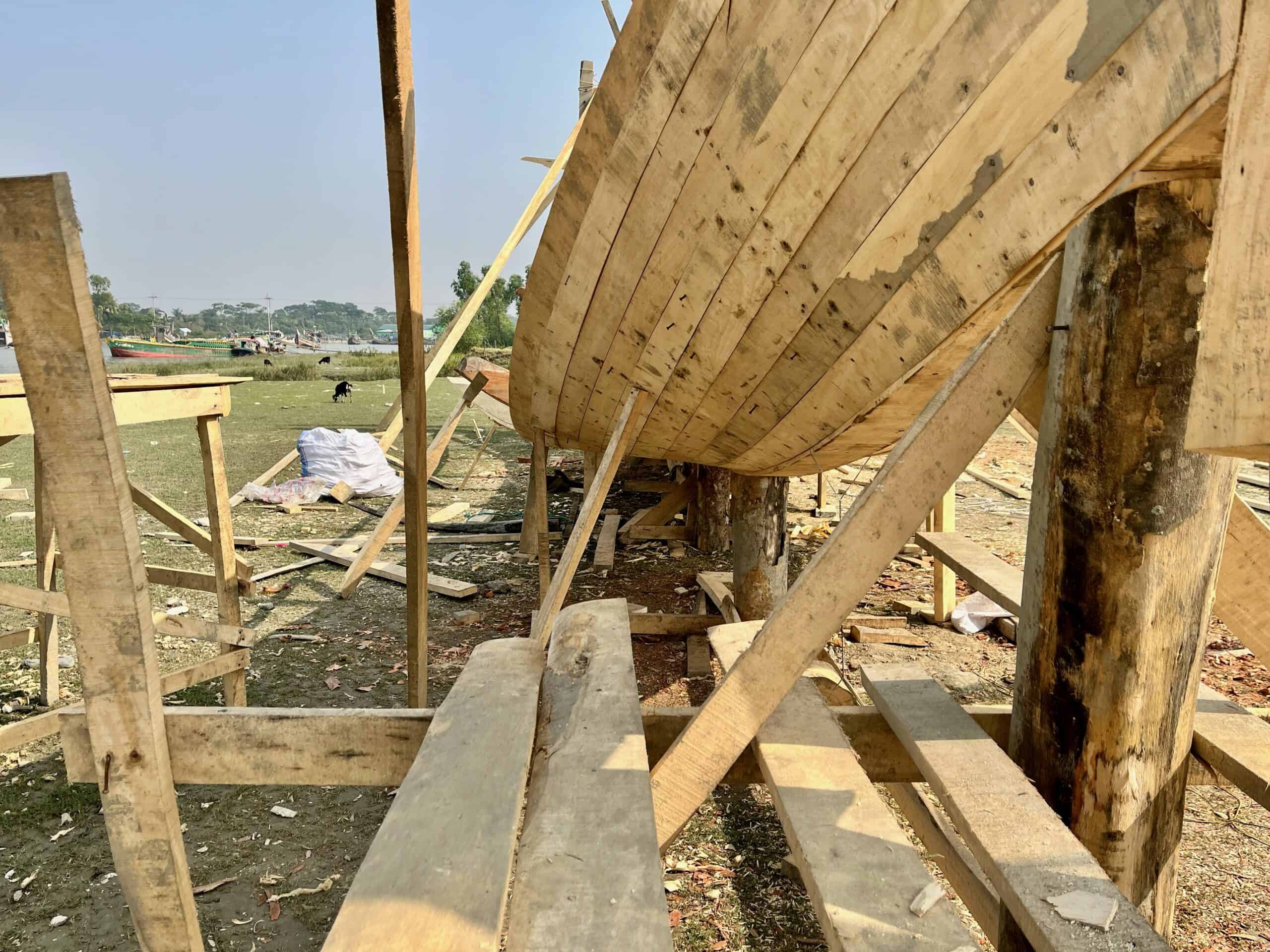
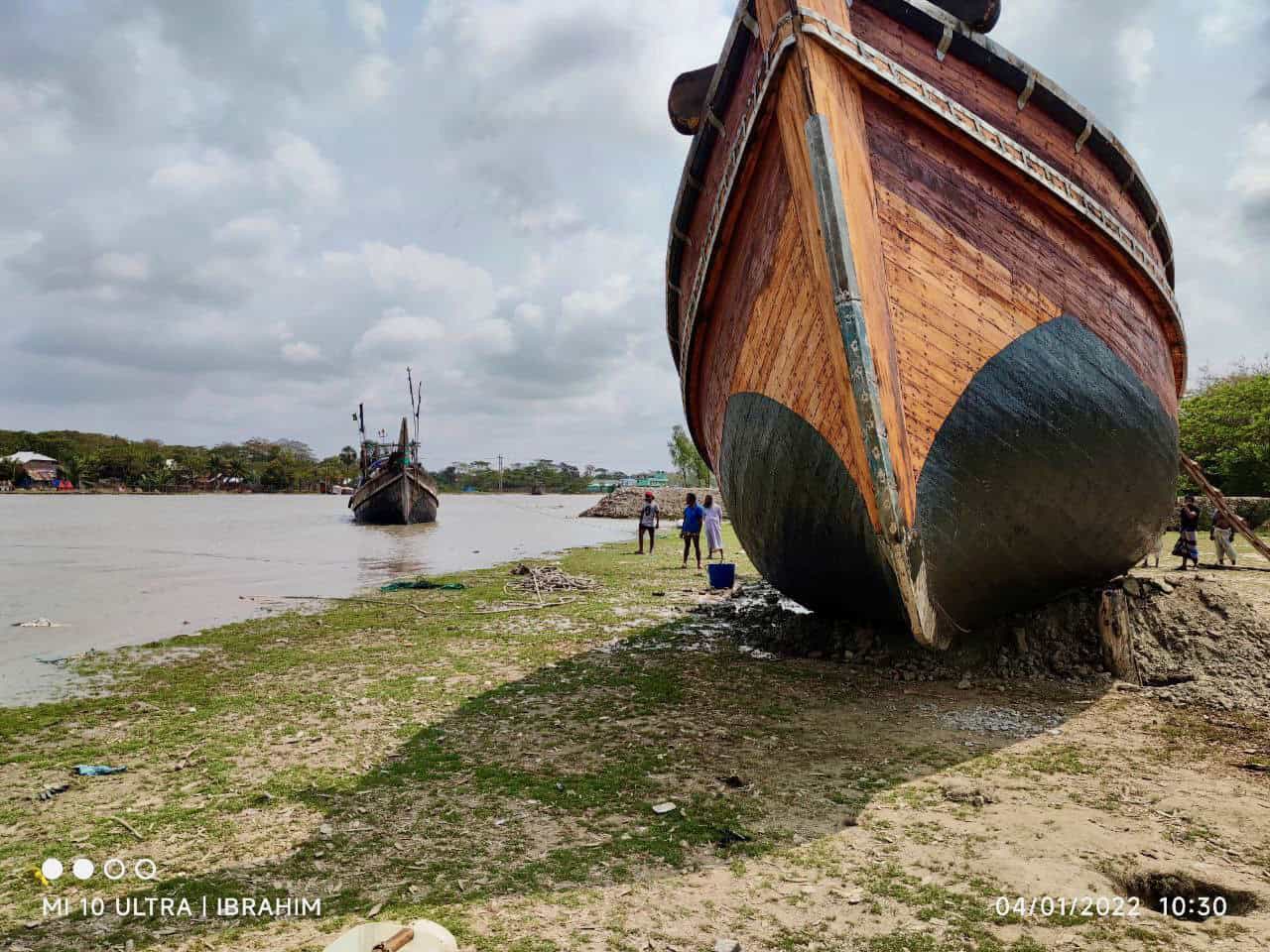
The sampan’s distinctive design immediately catches the eye. Traditional sampan fishing boats feature a broad, flat bottom expertly crafted along an elegantly curved keel line. This unique hull shape is crowned with an “anni”—a sharply rising bow that’s characteristic of Chittagonian sampans. These design elements aren’t merely aesthetic; they provide crucial stability and navigability in the challenging conditions of the Bay of Bengal.
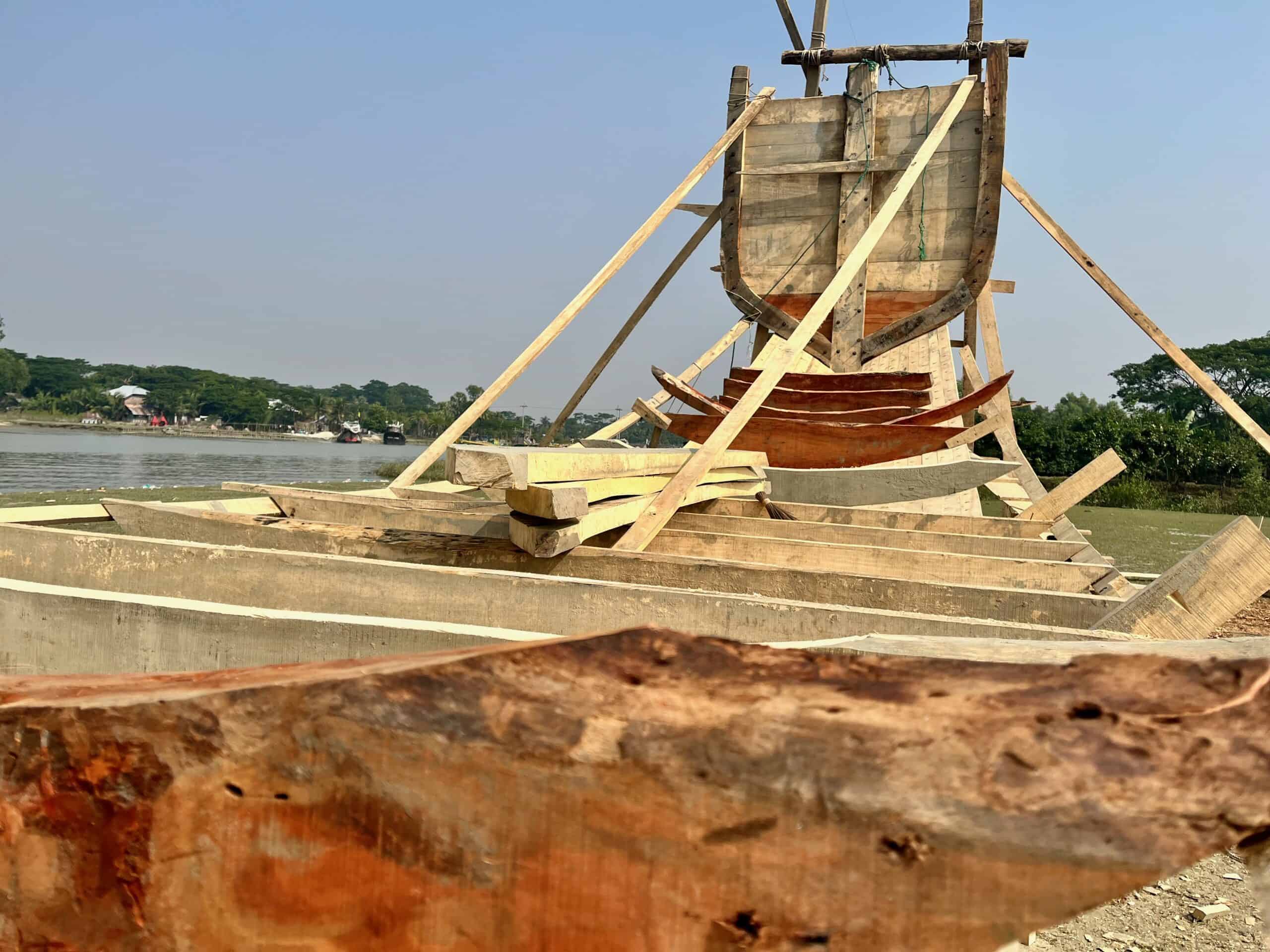
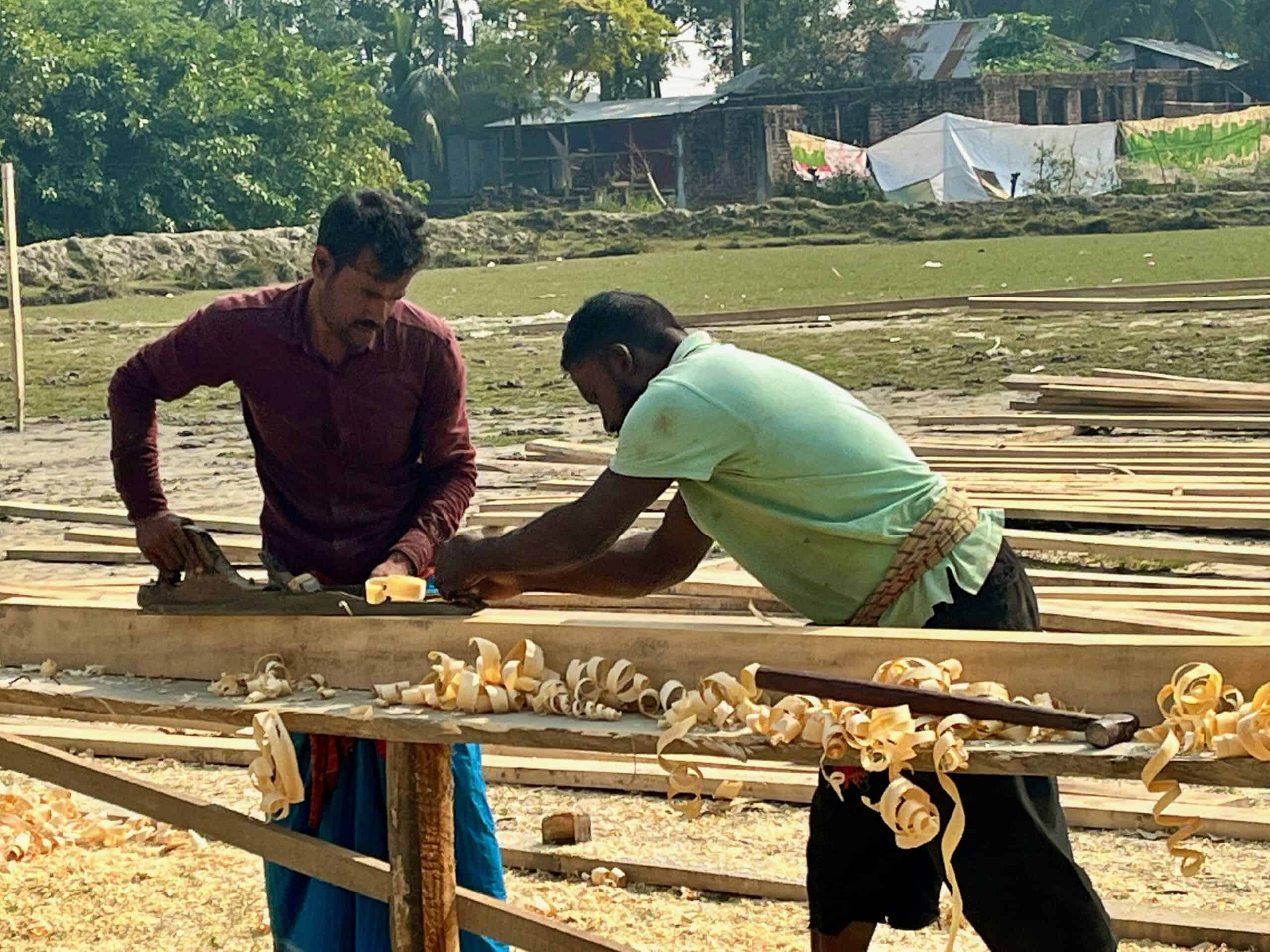
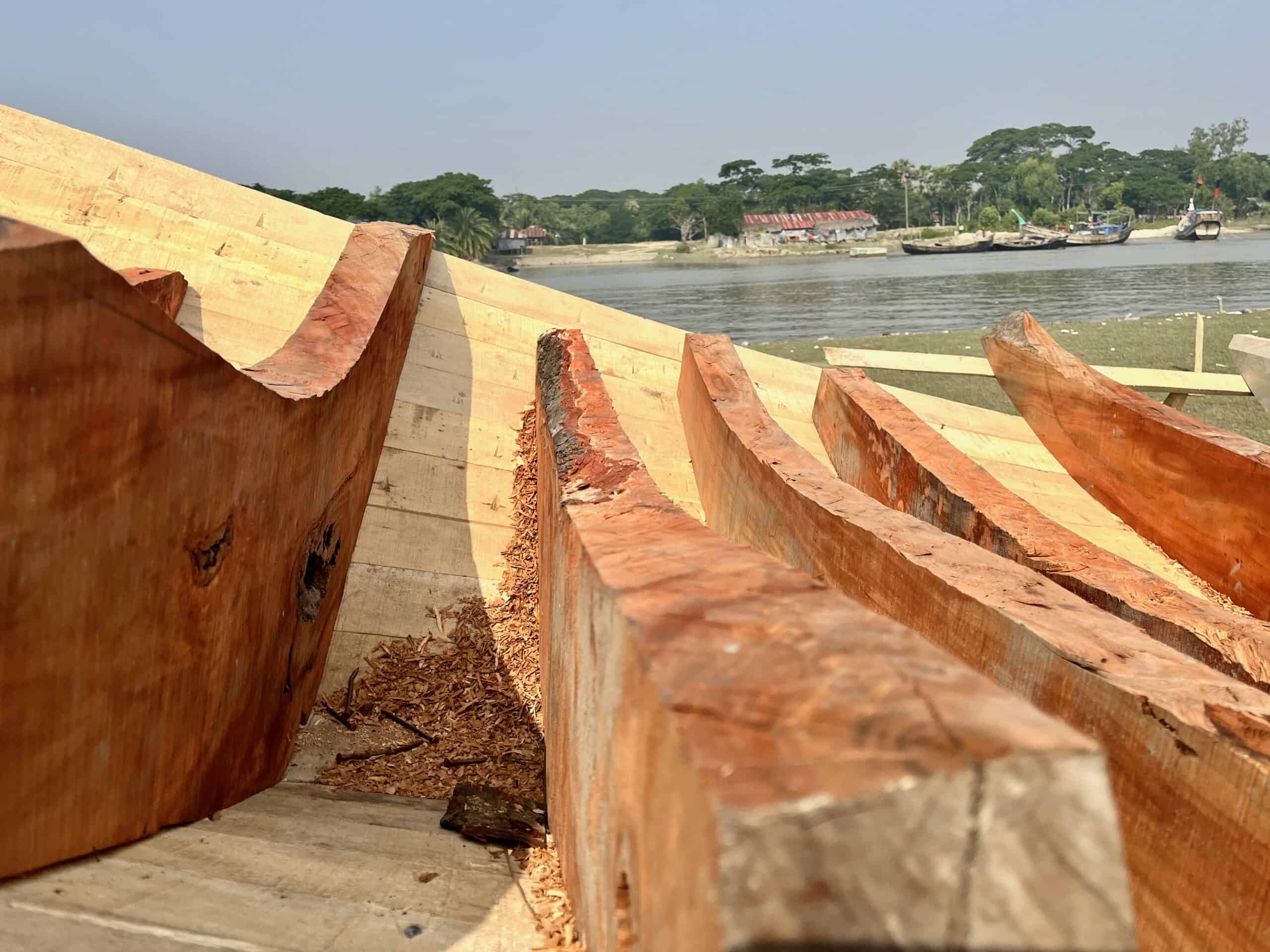
Traditional sampan construction showcases exceptional artisanal skill. Boat builders use various hardwoods native to Bangladesh, including Pitraj, Gamari, Jam, Garjan, Phool Karai, and Hinyari. Each wooden plank is meticulously shaped and fitted using traditional hand tools under the intense tropical sun.
This wooden boat building craftsmanship blends centuries-old tradition with practical utility, ensuring each vessel is both a work of maritime art and a functional survival tool.
Life Aboard a Traditional Bangladeshi Fishing Boat
Once the wooden hull is completed and sealed with protective tar coating, and the diesel engine roars to life, the sampan transforms into a complete floating community. Every inch of the fishing boat is strategically utilized: beneath the deck lies a storage area packed with ice and freshly caught fish, while the crew’s living quarters occupy the space above. The top deck features basic facilities, including a squat toilet and a small cooking area, where a dedicated cook ensures hot meals for the crew.
Each fishing voyage sees up to 20 men navigating the vast Bay of Bengal, confronting unpredictable weather conditions for 3-10 days at a stretch.
The resilience of these Bangladesh fishermen is astounding as they endure extreme conditions to earn their livelihood, their fate interwoven with the sampan’s wooden hull.
The Lifecycle and Cultural Significance of Sampan Boats
Despite the durable tar-based protective coating, traditional sampan fishing boats rarely exceed a five-year lifespan before the constant exposure to seawater takes its toll and the wooden hulls begin to deteriorate. These once-majestic vessels are often repurposed as firewood—though the toxic nature of their protective coatings makes this practice concerning.
Clusters of sampan boats line the Bangladesh shoreline, testament to their pivotal role in regional fishing economies and coastal cultures. Watching these traditional wooden boats return loaded with the day’s catch or heading out for new fishing expeditions is a spectacular display of maritime skill and cultural tradition.
The etymology of “sampan” originates from the Cantonese phrase meaning “three planks,” underscoring the vessel’s pan-Asian footprint. While Chinese sampans feature a hull constructed from a single plank flanked by two side planks, the Chittagonian sampan showcases unique variations with narrow wooden straps and distinctive design elements.
Despite regional differences, similarities in hull design, construction techniques, and functional features reveal fascinating cross-cultural dialogue in Asian maritime architecture.
The Global Maritime Heritage of Sampan Fishing Boats
Sampans represent more than just fishing vessels; they are cultural ambassadors, embodying the maritime heritage and ingenuity of coastal populations across Bangladesh, Myanmar, Malaysia, Indonesia, Vietnam, China, and Japan. Each region has adapted these traditional boats to local conditions, whether through the Chittagonian sampan’s distinctive rising bow and triangular sail or regional variations in construction techniques.
In exploring traditional sampan construction, we discover not just a mode of transport but a vibrant tapestry of human adaptation, maritime craftsmanship, and cultural expression.
Each wooden plank and handcrafted joint tells a story of endurance, fishing community solidarity, and the timeless relationship between humanity and the sea. As we delve deeper into the lives these boats support, we’re reminded of the incredible diversity and traditional craftsmanship that characterizes Bangladesh’s coastal heritage—a reminder that even humble wooden crafts can encapsulate the spirit of a people.
Looking ahead, I’m excited to use Final Cut Pro to weave together a comprehensive video with captivating drone shots that will bring the entire boat-building journey to life.
With their rich history and countless stories of the fishermen who rely on them, these boats hold a unique allure. I’m excited to share these stories with you, and I hope you’ll stay tuned for more updates!
Witnessing Traditional Boat Building: A 30-Day Journey
Ibrahim’s employer owns three of these impressive traditional fishing boats.
Unfortunately, these wooden sampan boats rarely last five years before their hulls start deteriorating despite the tar-based protective coating. Discarded fishing boats are chopped up and used for firewood, which raises environmental concerns given the toxic burnoff of their protective coatings.
Clusters of traditional sampan boats dock along the Bangladesh shoreline, with many waiting to head out or returning from 3-10 day fishing expeditions on the Bay of Bengal. It’s incredible to witness the skill of these Bangladeshi fishermen, living and working on these wooden boats in crews of up to 20 men per vessel for days on end, through extreme weather conditions, earning just a few dollars per day.
Looking ahead, I’m excited to use Final Cut Pro to create a comprehensive documentary-style video with captivating drone footage that brings the entire traditional boat-building journey to life.
With their rich maritime history and countless stories of the fishermen who depend on them, these traditional sampan fishing boats hold unique cultural significance. I’m excited to share these Bangladesh coastal stories with you—stay tuned for more updates on traditional boat building and fishing heritage!
Behind the Scenes: Documenting Traditional Boat Construction
This video captures one sampan boat that holds special meaning for me. Remarkably, it was built in just 30 days. I was in Canada while Ibrahim was in Bangladesh when construction began. He contributed support work on the boat, applying the protective bottom coating and general labour.
When I arrived later that month, I began documenting the traditional boat-building process through video and photography, feeling deeply connected to every construction step. Perhaps it’s because I own a sailboat in Toronto, Canada, and share a deep connection to maritime life.
I love how this traditional boat-building project came together. –Daniel~Ibrahim
In Bangladesh, where rivers meet the sea,
The Sampan sails with quiet dignity.
A wooden craft, both humble and grand,
Born of skill from a craftsman’s hand.
Its belly broad, its head held high,
A crescent curve against the sky.
Crafted from woods like Garjan and Jam,
Each plank whispers tales of where it began.
Upon its deck, life sways and breathes,
Amidst the dance of the ocean’s heaves.
Twenty souls in unity bound,
In hope and courage, futures found.
With each voyage, the Sampan sings,
Of fishermen facing nature’s swings.
Braving storms with grit and grace,
Their lives defined by water’s embrace.
Though Sampans may only last a tide,
Their legacy in hearts abides.
A tapestry of culture and art,
In every curve, a story impart.
When wood meets flame in final rest,
The cycle of life’s journey manifest.
In coastal whispers, the Sampan’s lore,
Echoes forever on a distant shore.
From the Bay of Bengal to global seas,
The Sampan sails on gentle breeze.
Bridging worlds with its wooden form,
A symbol of humanity weathering the storm.
In each plank, a dream takes flight,
Underneath the stars of a tropical night.
A vessel of hope, resilience, and pride,
On the endless journey of the ebbing tide.
Daniel~Ibrahim
Stories of Bangladesh (Chapter 5)
Discover how documenting Bangladesh’s hidden stories—from fishing villages to tuk tuk rides—became my path to creative freedom and authentic storytelling.







EpicPath Production Notes
A behind-the-scenes look into the process of crafting EpicPath Stories.
It is where you see how we did it, so you can apply it to your own workflow (or not).
Where Stories Meet Strategy. Where Vision Becomes Workflow.
The Creative Objective
The Story & The Scene
The Scene: These boats last only 5 years. The coating is toxic. The fishermen are vulnerable. We focused on the specific woods used (Pitraj, Gamari, Jam) and the “anni” (the rising bow). We captured the raw reality of men living on a boat for 10 days in a storm and the fragility of the hull.
The Director’s Vision
The Production Pipeline
The Video Description
This module captures the raw reality of traditional wooden boat building in Bangladesh. Moving beyond simple documentation of the finished vessel, we document the 30-day manufacturing process that happens entirely by hand.
Shot with an iPhone and a drone, this footage proves that the most powerful stories are found in the hands of the craftsmen and the time it takes to build. By focusing on the specific woods (Pitraj, Gamari, Jam), the “anni” (rising bow), and the fragility of the hull, we create a piece of heritage data that highlights the environmental and safety issues of the industry. This is a testament to the “Presence Over Perfection” philosophy—capturing the process as it happens, not as we stage it.
Social Engine Optimization (SEO)
Blog Excerpt: Witness the 30-day journey of traditional wooden boat building in Bangladesh. This story captures the hands, the tools, and the raw reality of a dying heritage craft.
Meta Description: Discover the ancient art of Sampan boat building in Bangladesh. A 30-day documentary journey showing the hands, tools, and fragile hulls of traditional fishing vessels.
Focus Keyphrase: Traditional Sampan Boat Building Bangladesh
Related Keyphrase: Wooden Boat Manufacturing Process
Synonyms: Chittagonian Sampan, Pitraj wood, Gamari wood, Jam wood, Garjan wood, Ani bow, boat builder, maritime heritage, toxic coating, handcrafted vessel, Alipur boat building
The Field Exercise
Director’s Questions
- What is the “infrastructure” I am documenting?
- How does this story support a larger goal of heritage preservation?
- Am I capturing the reality, or just the result?
- What is the strategic value of the story I’m telling?
Bangladesh Fishermen: Life on Traditional Sampan Boats at Alipur Fish Market
Discover life on traditional sampan boats at Bangladesh’s Alipur fish market. Raw footage of fishermen and dock workers sharing meals on the Bay of Bengal.
Friendly Curious Locals Gather Around Me – Alipur Fish Docks – Bangladesh
Inside Alipur Fish Docks, Bangladesh: witness traditional sampan boats, hardworking fishermen, and the vibrant fish market on the Bay of Bengal. Raw documentary footage.
Parasailing in Cox’s Bazar, Bangladesh: A Thrilling Creative Adventure
Experience thrilling parasailing at Cox’s Bazar, Bangladesh – the world’s longest beach. Get travel tips, video footage, and creative inspiration for your adventure.
Motorcycle Adventures in Bangladesh: A Creative Journey Through Exotic Landscapes
Discover authentic motorcycle travel in Bangladesh. Join Daniel & Ibrahim’s adventure through villages, cities & countryside. Travel tips, stories & inspiration.
Experience Bangladesh Like a Local: The Ultimate Rickshaw Travel Guide
Experience Bangladesh like a local on a cycle rickshaw. Watch our authentic travel vlog exploring Dhaka, the Rickshaw Capital of the World. Travel tips inside.
The Ultimate Bangladesh Barber Experience: My Haircut Journey in Kuakata
Discover the authentic Bangladesh barber experience in Kuakata. From $1 haircuts to cultural immersion—my journey exploring creative freedom through grooming.
What Happens When You Take a WILD Tuk Tuk Ride in Bangladesh?
Experience the wild chaos of riding CNG tuk tuks through Bangladesh! From Dhaka’s streets to countryside adventures—an honest traveler’s guide to auto rickshaws.
Ibrahim Raises Bangladesh Flag Under Canadian Flag: A Toronto Marina Symbol of Solidarity for Democracy
Ibrahim raises the Bangladesh flag beneath Canada’s at Toronto Island Marina—a powerful symbol of solidarity for democracy and justice during civil unrest.
Kuakata Beach, Bangladesh: Where You Can Watch Both Sunrise and Sunset Over the Bay of Bengal
The sun rising and setting over the Bay of Bengal makes it a unique place in the region, providing a perfect view of beautiful nature. This video is a simple compilation of raw clips we took throughout visits in 2022-2023.
[Full-Story] Working at the Alipur Fish Docks: Inside Bangladesh’s Traditional Fishing Community
Discover life at Alipur Fish Docks in Bangladesh. Meet Ibrahim and the fishermen working traditional sampan boats on the Bay of Bengal. Photos & video inside.
Fatrarban Mango Forest, Bangladesh: A Hidden Gem in the Sundarbans (Travel Guide)
Discover Fatrarban Mango Forest in Bangladesh’s Sundarbans. Complete travel guide to Tengragiri Eco Park with stunning photos, local culture & boat tours.
Traditional Fishing in Bangladesh: Sunset Net Fishing at Cox’s Bazar Beach
Watch traditional fishermen pull nets at sunset on Bangladesh beaches. Authentic travel video capturing the fishing culture at Cox’s Bazar and the local fish markets.
How to Fight Back When Canada Wrongfully Denies Your Tourist Visa
Denied a Canadian tourist visa unfairly? Our guide shows how to appeal TRV refusals through Federal Court, request reconsideration & fight for justice.
Finding Love Across Borders: My Journey to Bangladesh During COVID-19 (And Yes, I Shit Myself Silly)
60-year-old Canadian’s raw, honest story of finding unexpected love in Bangladesh during a pandemic. Cross-cultural relationships, visa struggles, and taking risks for connection against all odds.